As mangueiras da linha de combustível são uma parte muito comum de um carro. Compreender o material das linhas de combustível pode ajudá-lo a escolher o produto mais adequado.
Automotivo mangueiras de linha de combustível normalmente são feitos de aço inoxidável, alumínio, aço revestido, plástico (nylon), ou materiais de borracha/elastômero. Muitas mangueiras modernas são revestidas com politetrafluoroetileno (PTFE) para resistência química superior e durabilidade. Mangueiras de metal oferecem resistência e resistência ao calor, mangueiras de plástico são leves e resistentes à corrosão, e mangueiras de borracha são flexíveis. A escolha depende do tipo do seu veículo, tipo de combustível, e requisitos de desempenho.
A escolha do material correto da linha de combustível requer consideração não apenas do custo, mas também da segurança, compatibilidade, e durabilidade. Vamos dar uma olhada em cada um deles.
materiais comuns para tubos de combustível e suas vantagens
Aço inoxidável:
Metal de alta qualidade que resiste à corrosão e ferrugem.
Vantagens
Excelente durabilidade
Suporta alta pressão e temperatura
Resiste à umidade e à corrosão causada pelo sal da estrada
Vida de serviço longo
Alumínio:
Metal leve comumente usado em aplicações de alto desempenho e corridas.
Vantagens:
Peso reduzido do veículo
Boa resistência à corrosão
Fácil de dobrar e fabricar
Adequado para construções de alto desempenho
Borracha (NBR, EPDM, Viton):
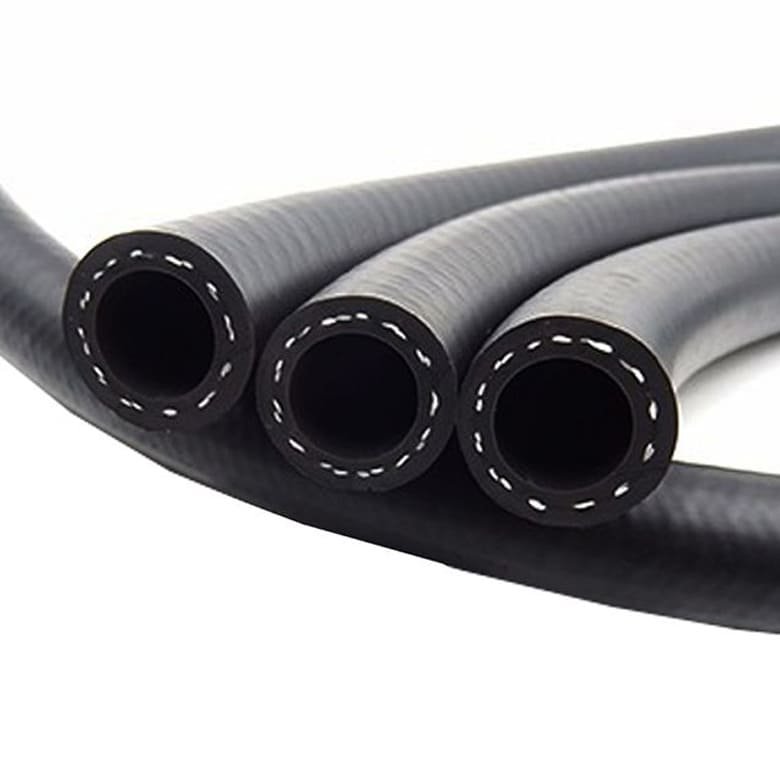
Mangueira flexível para baixa- e entrega de combustível de média pressão.
Vantagens: Fácil de instalar, Barato, Resistente à vibração, Boa flexibilidade em baixas temperaturas.
PTFE (Forro de Politetrafluoretileno):
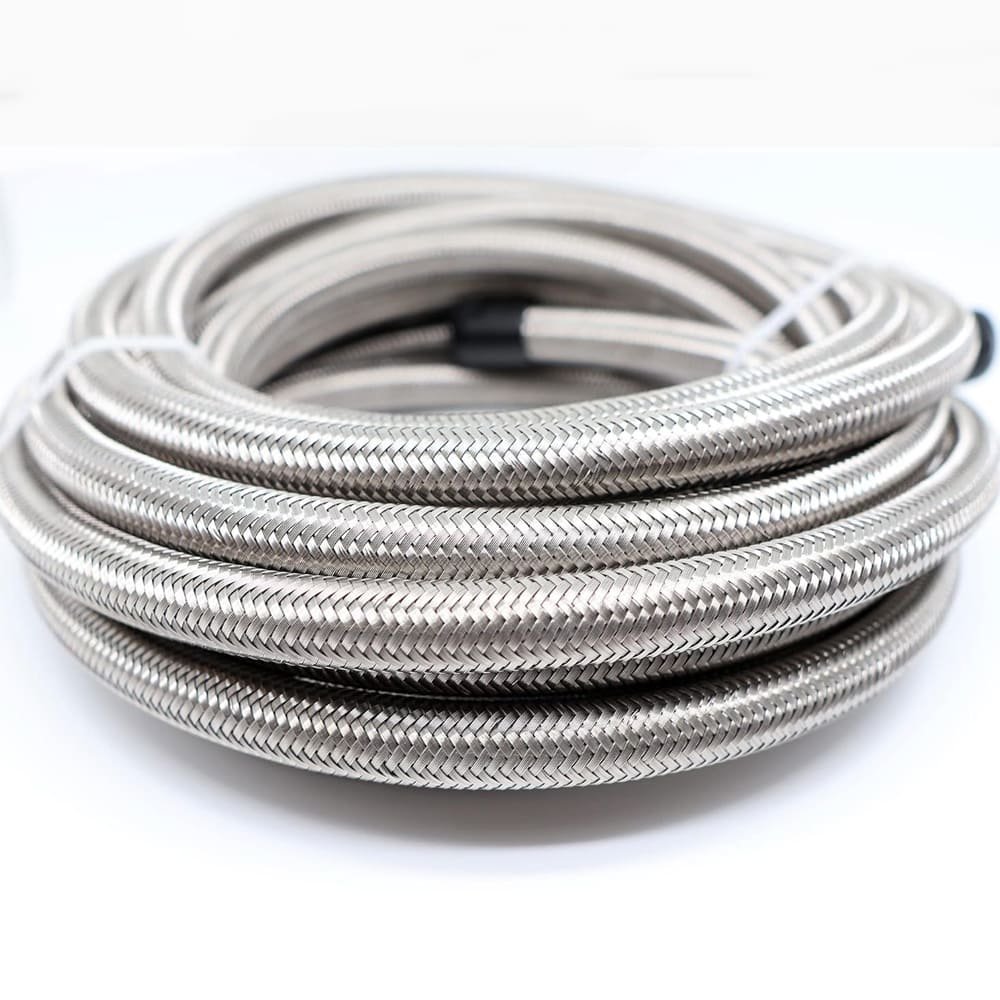
Um revestimento sintético de fluoropolímero é normalmente encontrado dentro de mangueiras trançadas.
Vantagens:
Resistente ao etanol, metanol, e combustíveis de corrida
Sem permeação de vapor de combustível
Resistência a altas temperaturas
Vida útil extremamente longa
Nylon (Plástico)
Polímero sintético leve usado em modernas linhas de produção OEM.
Vantagens
Livre de corrosão
Flexível para fiação apertada
Leve, melhorando a economia de combustível
Compatível com acessórios de conexão rápida
Qual é o melhor material para linhas de combustível?
O “melhor” material depende do tipo de combustível, pressão, e meio ambiente. No entanto, Linhas de combustível PTFE (politetrafluoretileno) são cada vez mais considerados o padrão ouro:
Resistência química – Lida com gasolina, diesel, misturas de etanol, e combustíveis de corrida sem degradação.
Resistência à temperatura – Suporta o calor extremo dos motores turboalimentados.
Longevidade – Dura mais que a borracha e até mesmo alguns metais em aplicações exigentes.
Resumo
As linhas de combustível são feitas de metal durável, náilon leve, ou flexível, fácil de instalar, e borracha acessível. Você pode escolher o produto que melhor se adapta às suas necessidades com base nas características do material. Para mais detalhes e um catálogo de produtos, entre em contato conosco hoje.