Are you stuck deciding between silicone and rubber vacuum hoses? Many car enthusiasts and industrial professionals face this decision. I tubi di gomma sono più economici, but they don’t last as long when exposed to pressure, Calore, e sostanze chimiche. Silicone hoses last longer, but they cost more. In questa guida, we’ll explain the differences between the two materials and the pros and cons of each.
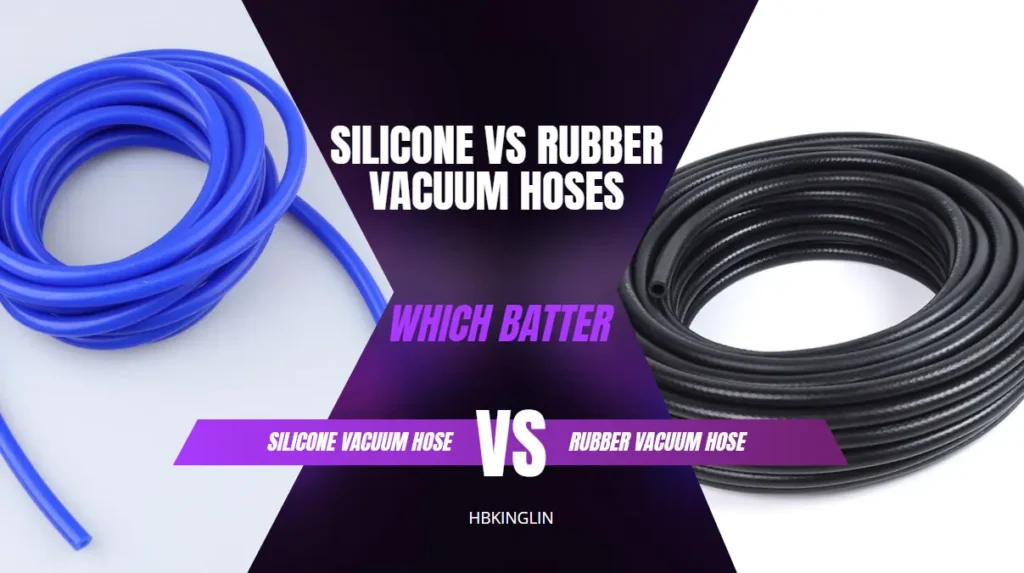
Silicone vacuum hoses are commonly preferred over rubber hoses because they can withstand more heat and chemicals. Rubber hoses are cheaper and easier to bend for low-pressure systems. Tuttavia, when you need to operate in high heat and have chemical exposure, silicone hoses are better. Costano di più, but because they last longer in extreme conditions, sono la scelta migliore per applicazioni automobilistiche e industriali.
Ora che abbiamo trattato le nozioni di base, tuffiamoci nel nocciolo della questione di ciascun materiale, come si comportano in ambienti diversi, e dove brillano o non sono all'altezza nelle applicazioni del mondo reale.
I tubi per vuoto in silicone sono migliori della gomma??

Quando si tratta di prestazioni, tubi di silicone tendono a surclassare i tubi in gomma, soprattutto in ambienti con temperature estreme. Il silicone può sopportare temperature molto più elevate senza rompersi o diventare fragile. Ciò lo rende perfetto per le applicazioni automobilistiche e industriali in cui la resistenza al calore è importante, come componenti del motore o lavorazioni chimiche. I tubi in gomma sono più flessibili ed economici, quindi sono una buona scelta per i sistemi a bassa pressione o non sensibili al calore.
Quali sono gli svantaggi dei tubi in silicone?
Mentre i tubi in silicone presentano molti vantaggi, non sono privi di inconvenienti. Uno dei principali svantaggi è la loro suscettibilità all’esposizione chimica. Non tutti i prodotti chimici, oli, e i carburanti sono compatibili con i tubi in silicone, e l'esposizione a sostanze chimiche sbagliate può causare la rottura del materiale. Per esempio, spesso i tubi in silicone non sono consigliati per l'uso con benzina o oli per motori. Inoltre, i tubi in silicone sono più costosi dei tubi in gomma, che potrebbe essere un fattore limitante per alcune persone o aziende.
Qual è il materiale migliore per i tubi del vuoto?
Mentre la maggior parte dei tubi del vuoto sono realizzati in silicone o gomma, ci sono altri tipi di tubi per vuoto da considerare. Poliuretano (Pu) i tubi del vuoto offrono un buon equilibrio di flessibilità, Resistenza chimica, e durata, rendendoli un'ottima scelta per applicazioni industriali o commerciali. PU hoses are great for applications where you need a hose that is both flexible and abrasion-resistant. For automotive or general-purpose use, silicone or rubber hoses are probably the best choice, depending on the conditions where you will be using the hose.
Che è meglio: silicone or rubber intercooler hose?
In automotive applications, especially in the world of performance vehicles, silicone intercooler hoses are the hose of choice. They’re tougher, they can handle the higher pressure, and they can handle the heat cycling that happens in a forced induction system. Silicone hoses last longer, and they’re more resistant to aging and environmental factors. They’re a great solution. I tubi di gomma sono più economici. If you’re not doing anything too crazy, you can get away with a rubber hose.
Silicone vs rubber vacuum hose for cars
When it comes to choosing between silicone and rubber vacuum hoses for cars, it all depends on your vehicle and the conditions it operates under. For high-performance vehicles or those that operate in extreme temperatures, silicone hoses are the only way to go. They’re durable and heat resistant, which you need to get the best performance. For normal vehicles, rubber hoses are fine. They’re also good if you’re doing a repair on a budget.
Silicone vacuum hose kit: Worth the investment?
Silicone vacuum hose kits are a great way to upgrade your vacuum hose system. These kits usually come with multiple pre-cut lengths and are designed to fit a variety of applications. They are more expensive than buying individual rubber hoses, but they are a long-term investment due to their better durability, higher heat resistance, and overall better performance. If you are replacing hoses in a high-performance engine or industrial application, you should consider a silicone vacuum hose kit.
Riepilogo:
When it comes to choosing between silicone and rubber vacuum hoses, it comes down to what you need. Silicone hoses are more durable, especially in high-heat and chemical environments, while rubber hoses are more cost-effective and flexible for less demanding applications.
Look at your project or your vehicle and the requirements and the environment it’s in, and you can make the decision on which hose material will serve you best in the long run.
Alternatively, you can contact us directly. Kinglin is a professional manufacturer of silicone rubber hoses, and our customers are located all over the world. We offer factory prices, qualità stabile, Consegna rapida, and professional service.