Les colliers de serrage fixent et maintiennent les tuyaux aux raccords ou aux connecteurs.. Cela garantit une connexion sécurisée et aide à empêcher le tuyau de glisser ou de fuir.. Dans ce guide, nous vous expliquerons les étapes à suivre pour utiliser efficacement les colliers de serrage, tout, des bases aux conseils avancés.
Pour utiliser un pince à tuyaux, la première chose que vous voulez faire est de faire glisser le collier sur le tuyau et de le mettre dans la position où vous en avez besoin. Alors, vous souhaitez serrer la pince avec un tournevis ou une pince, en m'assurant qu'il est bien serré, mais pas trop serré. Selon le type de pince dont vous disposez (comme une pince à vis sans fin ou une pince à ressort), vous devrez peut-être ajuster le mécanisme ou la tension pour obtenir une bonne étanchéité. Enfin, après avoir serré la pince, assurez-vous qu'il n'y a pas de fuite.
Maintenant que vous avez une idée générale des bases, Examinons les différents types de colliers de serrage et comment choisir celui qui convient à votre application., ainsi que résoudre les erreurs courantes.

Comment fonctionnent les colliers de serrage à ressort?
Les colliers de serrage à ressort sont uniques car ils utilisent la tension du ressort pour maintenir un tuyau fermement en place.. Les extrémités ouvertes de ces pinces sont maintenues ensemble par la tension du ressort. Lorsque la languette est pressée, la pince s'élargit, vous permettant de le placer sur le tuyau. Une fois libéré, la tension du ressort applique automatiquement une compression, maintenir solidement le tuyau en place.
Ces pinces sont souvent utilisées pour les connexions flexibles, en particulier dans les applications où le tuyau peut se dilater ou se contracter en raison des changements de pression. Ils sont faciles à installer, retirer, et ajuster
Quels sont les différents types de colliers de serrage?
Il existe de nombreux types de colliers de serrage, chacun adapté à différentes applications. Voici les pinces les plus courantes:
- Pinces à engrenages à vis sans fin: sont les pinces les plus couramment utilisées et possèdent une bande métallique avec un mécanisme à vis. Il vous suffit de serrer la vis pour appliquer une pression autour du tuyau.
- Pinces à ressort: Ces modèles sont dotés d'un mécanisme à ressort et conviennent mieux aux tuyaux flexibles.. À mesure que la pression augmente, ils s'ajustent automatiquement à la taille du tuyau.
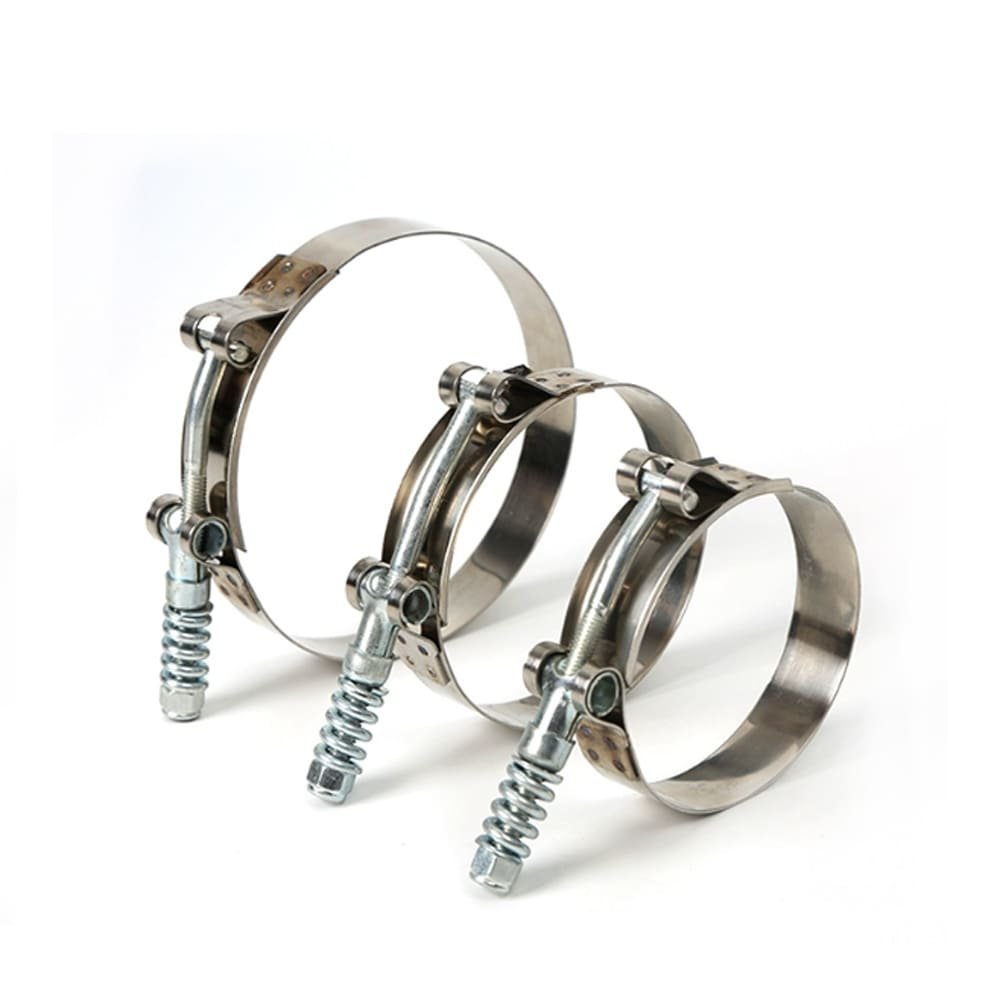
- Pinces de boulon en T: Ceux-ci sont utilisés pour les applications à haute pression qui nécessitent une étanchéité plus sécurisée. Le boulon en T permet un serrage uniforme sur une plus grande surface.
Comment serrer correctement un collier de serrage?
Serrer correctement un collier de serrage garantit qu'il reste en place sans endommager le tuyau.. Suivez-les 5 mesures:
- Positionnement de la pince: Placez le collier de serrage autour du tuyau et positionnez-le là où vous souhaitez qu'il soit scellé..
- Serrez la pince: Utilisez un tournevis, clé, ou une pince pour serrer la pince jusqu'à ce qu'elle soit bien ajustée mais pas trop serrée. Un serrage excessif peut endommager le tuyau ou provoquer des fuites.
- Vérifier les fuites: Une fois serré, vérifiez le tuyau pour tout signe de fuite en appliquant une pression sur le système.
- Ajuster si nécessaire: Si vous trouvez une fuite, desserrez le collier et repositionnez-le avant de resserrer.
- Assurez-vous que la pince est correctement fixée: Vérifiez à nouveau que le collier est centré et uniformément serré autour du tuyau..
Comment utiliser un collier de serrage à vis sans fin
Le collier de serrage à vis sans fin est le type le plus couramment utilisé dans les applications automobiles et de plomberie.. Voici comment en utiliser un:
- Mettez le collier sur le tuyau: Placez le collier sur le tuyau et faites-le glisser là où vous le souhaitez.
- Serrez la vis: Utilisez un tournevis pour serrer la vis jusqu'à ce que le collier soit bien ajusté contre le tuyau..
- Assurez-vous qu'il est serré: Assurez-vous que le collier est suffisamment serré pour empêcher le tuyau de fuir., mais ne le serrez pas trop et n'endommagez pas le tuyau.
Les pinces à vis sans fin sont fiables et faciles à utiliser, ce qui les rend parfaits pour la plupart des applications standard.
Comment réparer un collier de serrage desserré ?
Si vous remarquez que votre collier de serrage est desserré et provoque des fuites, voici ce que vous pouvez faire:
- Desserrez la pince: Si nécessaire, utilisez un tournevis ou une pince pour desserrer la pince.
- Repositionner la pince: Déplacez le collier pour qu'il soit centré autour du tuyau, assurant une étanchéité uniforme.
- Serrez la pince: Resserrez soigneusement la pince, en s'assurant qu'il est bien ajusté mais pas trop serré
Il est important de vérifier le tuyau pour toute usure, car un tuyau endommagé pourrait ne pas former une bonne étanchéité même avec un collier de serrage serré.
Erreurs courantes lors de l'utilisation de colliers de serrage et comment les éviter
- Trop serrer: Vous ne voulez pas appuyer sur la vis pour vous assurer qu’elle est bien serrée, car vous pourriez endommager le tuyau ou le collier et provoquer des fuites. Vous souhaitez le resserrer progressivement et vérifier s’il y a des fuites avant d’avoir terminé.
- Utiliser la mauvaise pince: Vous pourriez avoir besoin d'un autre type de pince pour différentes applications. Si vous essayez de réaliser un joint haute pression et que vous utilisez une pince à ressort, cela pourrait ne pas fonctionner aussi bien qu'une pince à vis sans fin. Vous devez utiliser la bonne pince pour la bonne application.
- Ne pas vérifier les fuites: Une fois que vous avez mis le collier de serrage, tu dois vérifier les fuites. Si vous n’avez pas suffisamment serré la pince, ou si le tuyau est endommagé, ça va couler. Vous devez le vérifier avant de l'utiliser.